
Darwin’s Journey: A Cautionary Tale About a Blocked Bladder
Meet Darwin — a 14-year-old domestic cat who belongs to our very own Dr. Michelle. Recently, Darwin went through a serious health scare, and Dr. Michelle wanted to share his story with you — not only as a cautionary tale for fellow cat owners, but also to highlight the incredible care and teamwork that helped save his life.
It all started when Darwin quietly disappeared for a couple of days. When Dr. Michelle finally found him, he wasn’t himself — he was hiding, unable to move, and in visible pain. Despite being a vet, in that moment she felt just like any other pet parent: scared and heartbroken. She rushed Darwin to the clinic.
The team quickly sprang into action. Dr. Olivia assessed Darwin while our wonderful nurses provided emergency care — giving him oxygen, checking his vital signs, running blood tests, and placing an IV catheter. It was clear something was very wrong: Darwin was cold, lethargic, and his bladder felt very full and firm — a sign that he might be “blocked.”
What Does “Blocked” Mean?
Male cats can sometimes develop a blockage in their urethra (the tube that carries urine out of the body), which can stop them from urinating. This condition is painful, dangerous, and if left untreated, can be fatal. Common signs include frequent trips to the litter box with little to no urine, vocalizing in pain, vomiting, or licking around the urinary area. Unfortunately, Darwin hadn’t shown any of these usual signs — making his case more difficult to detect until things became critical.
Blood tests confirmed that Darwin’s kidneys were under severe stress from the buildup of urine and toxins. One of the biggest dangers was his high potassium level, which can cause the heart to slow down or even stop. He was in real trouble.
Over the next few days, Darwin received intensive care from our team.
• He was warmed up and treated for shock.
• A urinary catheter was placed to relieve his blocked bladder.
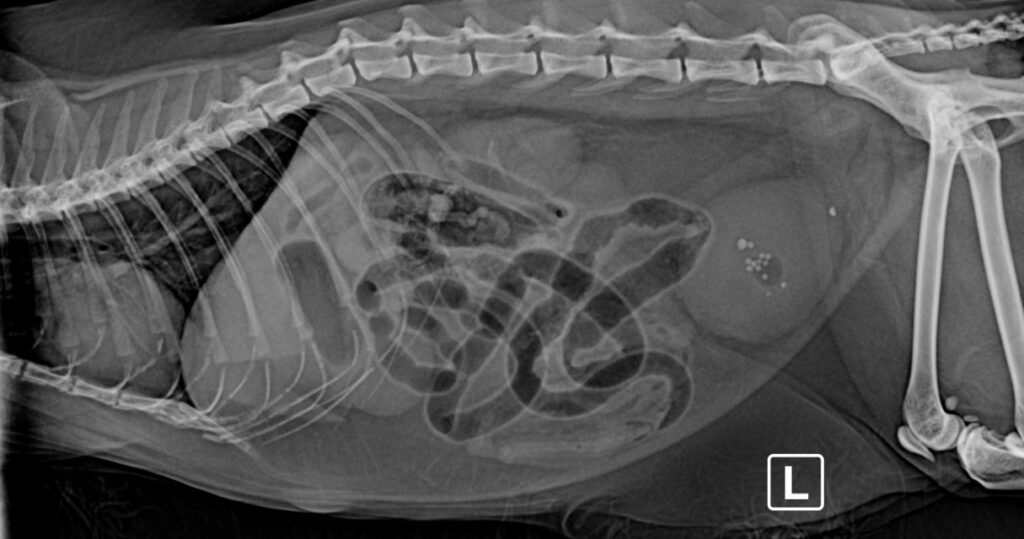
• X-rays revealed the cause: 13 tiny bladder stones, one of which had lodged in his urethra, which may be seen in the Xray below..
Darwin’s story is a powerful reminder to all pet owners: if you notice anything unusual — even small changes in behaviour — please don’t wait. Prompt care can make all the difference.