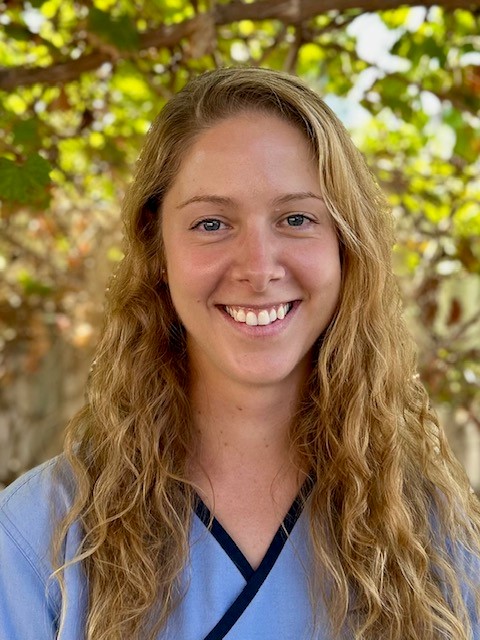
Getting to know Dr Bec Churchill
Dr Bec has always had a love for animals and a deep commitment to their health and well being. One of her favourite parts of being a vet is building lasting relationships with clients and their pets, supporting them through every stage of life.
Dr Bec thrives on the challenge of tackling complex internal medicine cases and enjoys performing soft tissue and abdominal surgeries. Bec is keen to continually grow her skills and is currently working towards further developing her knowledge in internal medicine and ultrasound, which she believes will help provide better care to her patients.
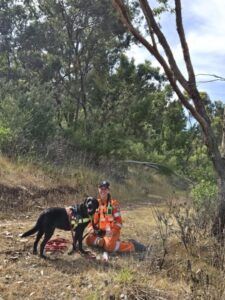
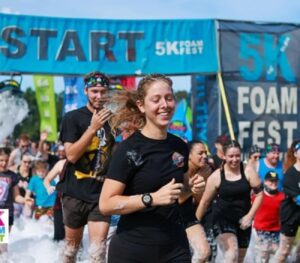
Outside of work, Dr Bec is an avid runner and is currently training for an upcoming 10km race. She also volunteers with the SES alongside her search and rescue dog Herb, where together they assist SAPOL in locating missing people. When Dr Bec isn’t working at GAH, running, or on a call out with the SES- she loves spending time with her family and her fur babies. Dr Bec’s fur babies include Tammie (American Staffy), Herb (Labrador x Golden Retriever), Sampson (Domestic Cat) and Mud (Standardbred Horse).
You have probably all seen Dr Bec’s beautiful smile around the clinic already, if not- wish her a warm welcome next time you’re in the clinic. We are so happy to have Dr Bec apart of the team at Gawler Animal Hospital.
—————————————————————————————————————————————————————————————–
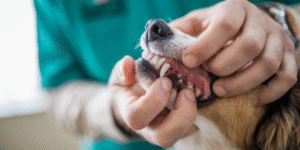
Dental visits for pets are more familiar than you think
With most of us considering our pets to be an integral part of the family, it may comfort you to know that our veterinary dental health procedures share many similarities with the dental care you receive.
Read on to learn more about some of the key similarities between human and pet dentistry.
Dental charting
Just like in humans, before we perform dental treatments on your pet, we will first “chart” their oral health. This involves assessing each tooth visually, with special measuring instruments, and with dental x-rays, and making notations about any unhealthy lesions that may be present (such as unhealthy deepening of the gum pocket around a tooth suggestive of periodontal disease). In this way, we can better monitor your pet’s dental health over time and therefore make informed recommendations about the most suitable care for them.
Scaling and polishing
Just like in people, pets undergoing a dental procedure will have their teeth cleaned with an ultrasonic scaler. This is the fine-pointed instrument that gently vibrates against teeth to clean off hard tartar accumulations, whilst emitting a stream of water to prevent overheating of the tooth. After scaling, your pet’s teeth are polished to leave the tooth surface extra clean and smooth.
Nerve blocks for extractions
Should your pet require a tooth to be extracted, rest assured that they will receive the same numbing nerve blocks as you would! Prior to the extraction, we use a fine needle to deposit local anaesthetic medicine around specific nerve sites in your pet’s mouth, so they won’t feel a thing! This also helps your pet to remain more comfortable when they wake up from their procedure.
Pain relief
Just like us after an extraction, we will send your pet home with several days of pain relief medication to help ensure a comfortable recovery.
To book your pet in for some top-notch dental care, consult our tooth-tastic team!
To read more of this months newsletter -> Click Here!